For Research Use Only. All products sold by Ironcrest Peptides are intended exclusively for laboratory and scientific research. They are not for human consumption, are not dietary supplements, are not approved by the FDA, and are not intended to diagnose, treat, cure, or prevent any disease or condition.
Thymosin Alpha-1

AHK-Cu Research

For Research Use Only

“In the present study, the effects of L-alanyl-L-histidyl-L-lysine-Cu2+ (AHK-Cu) on human hair growth ex vivo and cultured dermal papilla cells were evaluated.”

Pyo HK, et al. · Arch Pharm Res · 2007 · PMID 17703734 · PubMed

Thymosin Alpha-1

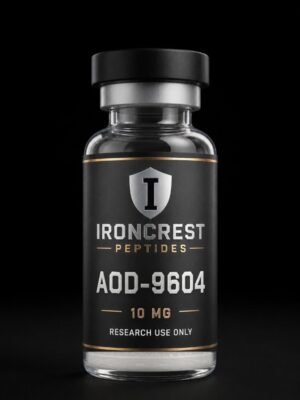
AOD-9604 Research

For Research Use Only

“AOD9604 is a peptide consisting of the C-terminal fragment of human growth hormone from amino acids 177-191 with an additional tyrosine residue at the N-terminus of the peptide.”

Cox HD, et al. · Drug Test Anal · 2015 · PMID 25208511 · PubMed

Thymosin Alpha-1

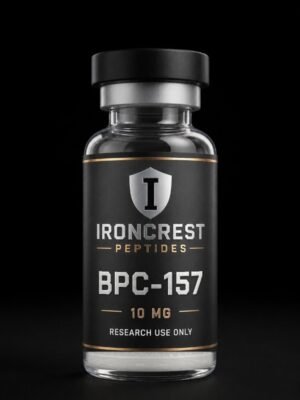
BPC-157 Research

For Research Use Only

“BPC-157 is a synthetic pentadecapeptide originally isolated from gastric juice and has demonstrated regenerative properties across numerous animal models.”

McGuire FP, et al. · Curr Rev Musculoskelet Med · 2025 · PMID 40789979 · PubMed

Thymosin Alpha-1

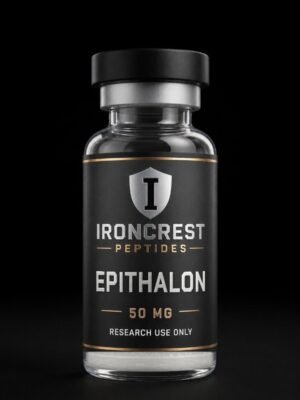
Epithalon Research

For Research Use Only

“Epitalon, also known as Epithalon or Epithalone, is a tetrapeptide, Ala-Glu-Asp-Gly (AEDG), which was synthesized based on the amino acids composition of Epithalamin, a bovine pineal gland extract, prior to its discovery in pineal gland polypeptide complex solution.”

Araj SK, et al. · Int J Mol Sci · 2025 · PMID 40141333 · PubMed

Thymosin Alpha-1

GHK-Cu Research

For Research Use Only

“GHK (glycyl-L-histidyl-L-lysine) is a naturally occurring peptide found in human serum with levels averaging 200 ng/ml at age 20 but declining to an average of 80 ng/ml by age 60. The molecule has a very high affinity for copper and forms the chelate GHK-Cu.”

Dou Y, et al. · Aging Pathobiol Ther · 2020 · PMID 35083444 · PubMed

Thymosin Alpha-1

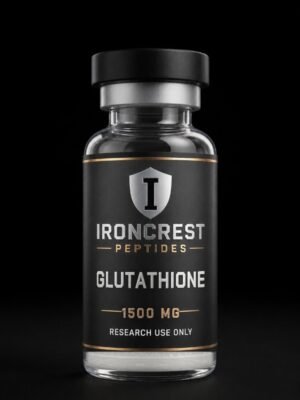
Glutathione Research

For Research Use Only

“Glutathione (GSH) is a fundamental tripeptide essential for maintaining cellular redox homeostasis, detoxification, and immune regulation.”

Bradauskienė V, et al. · Nutrients · 2026 · PMID 42197099 · PubMed

Thymosin Alpha-1

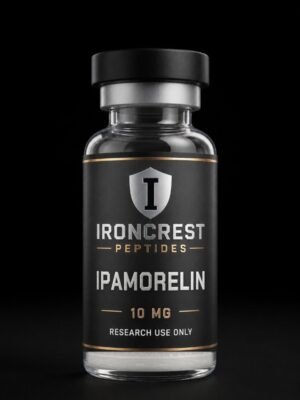
Ipamorelin Research

For Research Use Only

“Ipamorelin is a new and potent synthetic pentapeptide which has distinct and specific growth hormone (GH)-releasing properties.”

Johansen PB, et al. · Growth Horm IGF Res · 1999 · PMID 10373343 · PubMed

Thymosin Alpha-1

KPV Research

For Research Use Only

“KPV is a tripeptide (Lys-Pro-Val), which possesses anti-inflammatory properties; however, its mechanisms of action still remain unknown.”

Dalmasso G, et al. · Gastroenterology · 2008 · PMID 18061177 · PubMed

Thymosin Alpha-1

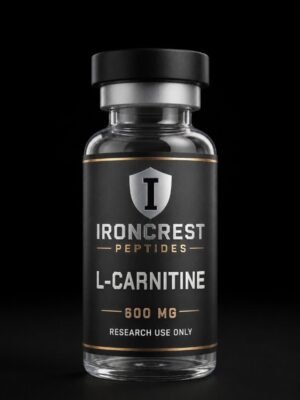
L-Carnitine Research

For Research Use Only

“L-carnitine, a quaternary ammonium compound derived from amino acids, serves an essential role in fatty acid metabolism.”

Sisi M, et al. · Front Nutr · 2025 · PMID 40948868 · PubMed

Thymosin Alpha-1

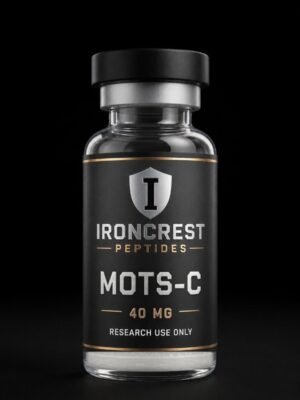
MOTS-C Research

For Research Use Only

“Mitochondrial ORF of the 12S rRNA Type-C (MOTS-c) is a mitochondrial-derived peptide composed of 16 amino acids encoded by the 12S rRNA region of the mitochondrial genome.”

Zheng Y, et al. · Front Endocrinol (Lausanne) · 2023 · PMID 36761202 · PubMed

Thymosin Alpha-1

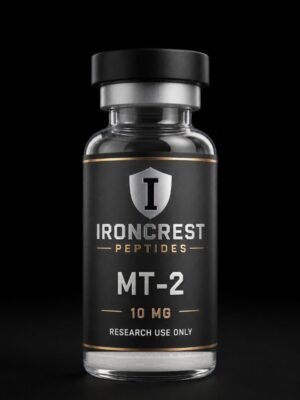
MT-2 Research

For Research Use Only

“Melanotan II is an unlicensed synthetic peptide analog belonging to the melanocortin hormone family.”

Bonchev A, et al. · Life (Basel) · 2026 · PMID 41752902 · PubMed

Thymosin Alpha-1

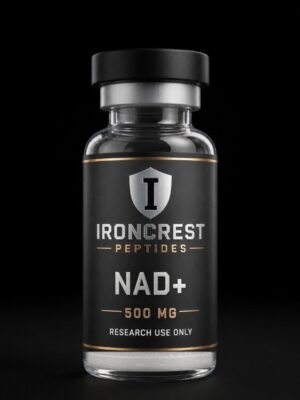
NAD+ Research

For Research Use Only

“Nicotinamide adenine dinucleotide (NAD+) is a key coenzyme for human redox reactions, vital for cellular health and metabolic balance.”

Tang Y, et al. · Chem Sci · 2026 · PMID 41705036 · PubMed

Thymosin Alpha-1

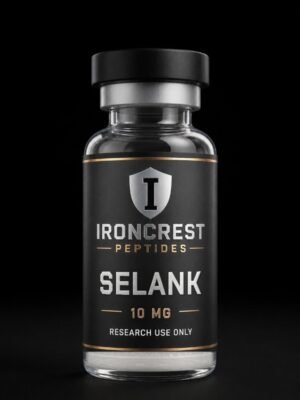
Selank Research

For Research Use Only

“It was shown that Selank affect the [3H]GABA binding as a positive allosteric modulator.”

Vyunova TV, et al. · Protein Pept Lett · 2018 · PMID 30255741 · PubMed

Thymosin Alpha-1

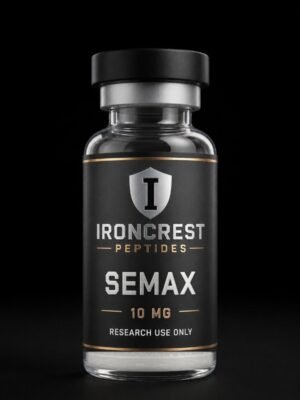
Semax Research

For Research Use Only

“Semax (Met-Glu-His-Phe-Pro-Gly-Pro) is a synthetic regulatory peptide that possesses a high affinity for Cu(II) ions.”

Tomasello MF, et al. · Bioinorg Chem Appl · 2025 · PMID 40496623 · PubMed

Thymosin Alpha-1

SS-31 Research

For Research Use Only

“Elamipretide binds to cardiolipin on the inner mitochondrial membrane, stabilizing respiratory chain supercomplexes, enhancing electron transport efficiency, and reducing reactive oxygen species production.”

Zhao C, et al. · Drug Discov Ther · 2026 · PMID 41260682 · PubMed

Thymosin Alpha-1

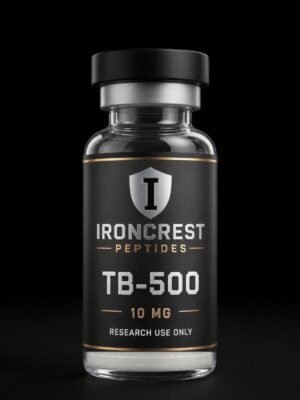
TB-500 Research

For Research Use Only

“TB-500 (Ac-LKKTETQ), derived from the active site of thymosin β4 (Tβ4), has various biological functions in its unacetylated form, LKKTETQ.”

Rahaman KA, et al. · J Chromatogr B Analyt Technol Biomed Life Sci · 2024 · PMID 38382158 · PubMed

Citations are reproduced verbatim from the published abstract. Follow any PubMed link for the full record, including the article title and authors.

Understanding the Research Chemical Regulatory Landscape

An overview of current FDA guidance relevant to research peptide procurement and use. Not legal advice. Consult qualified regulatory counsel for your specific situation.

FDA guidance on bulk drug substances used in compounding continues to evolve, and the classification of specific compounds is subject to ongoing review.

FDA Category Classifications

Under the FDA’s guidance, bulk drug substances are classified into categories that determine their eligibility for use in compounding for human administration. Category I compounds may be used in compounding; Category II compounds may not. The classification of specific compounds is under ongoing FDA review and can change; researchers should consult current FDA guidance directly rather than rely on any point-in-time list.

Importantly, Category II classification relates specifically to compounding for human use. Legitimate research use in controlled laboratory settings under institutional oversight is governed by separate regulations and institutional review requirements.

What This Means for Researchers

Researchers working with peptide compounds in institutional settings should consult with their institution’s regulatory affairs office and review current FDA guidance documents. Individual researchers should consult qualified regulatory counsel regarding their specific research context, jurisdiction, and institutional status.

Not Legal Advice

This article is provided for general informational purposes only. It does not constitute legal advice, regulatory guidance, or a representation of what is permissible in any specific jurisdiction or research context. Ironcrest Peptides is a research chemical supplier, not a law firm or regulatory agency. Researchers are responsible for their own compliance with all applicable federal, state, and institutional regulations.